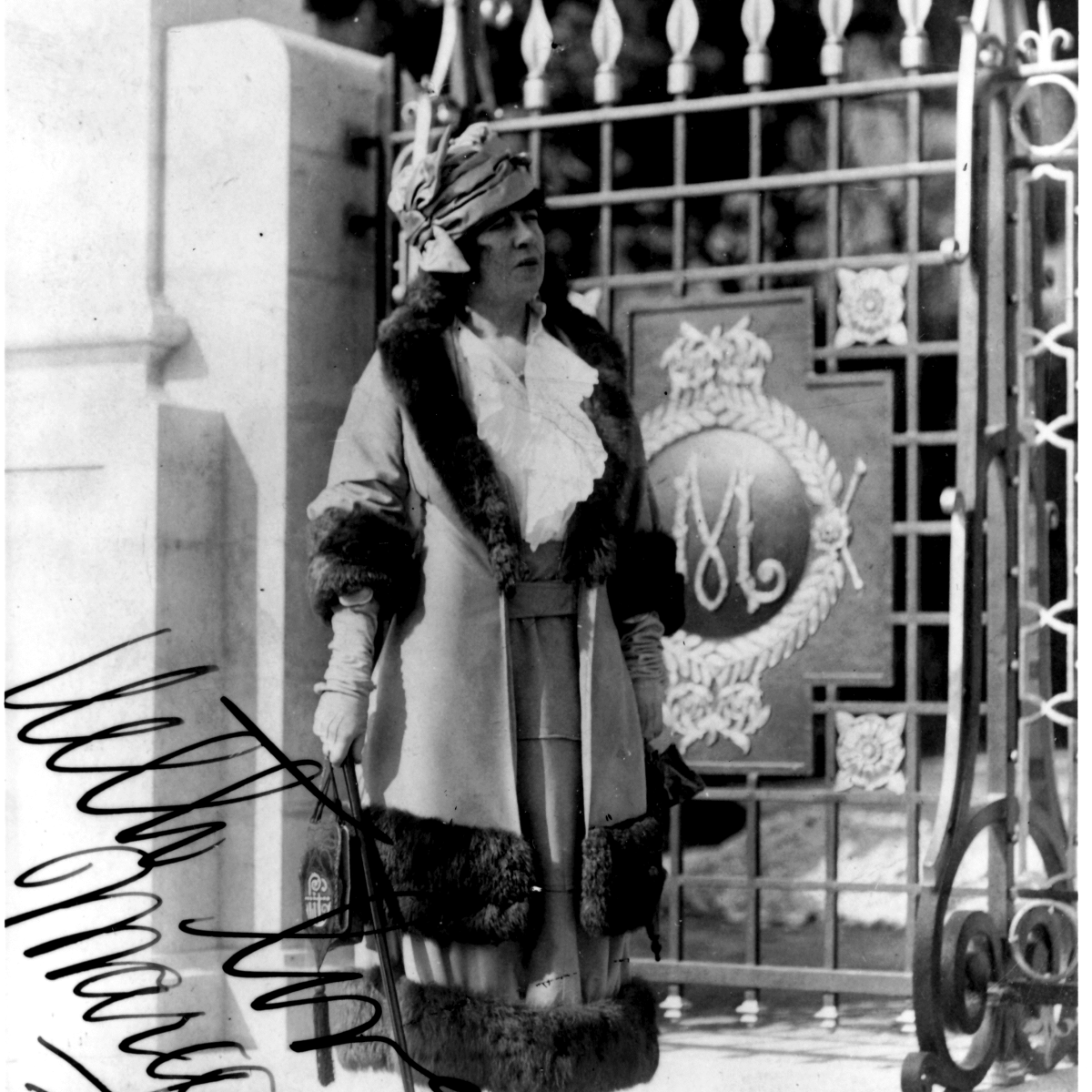
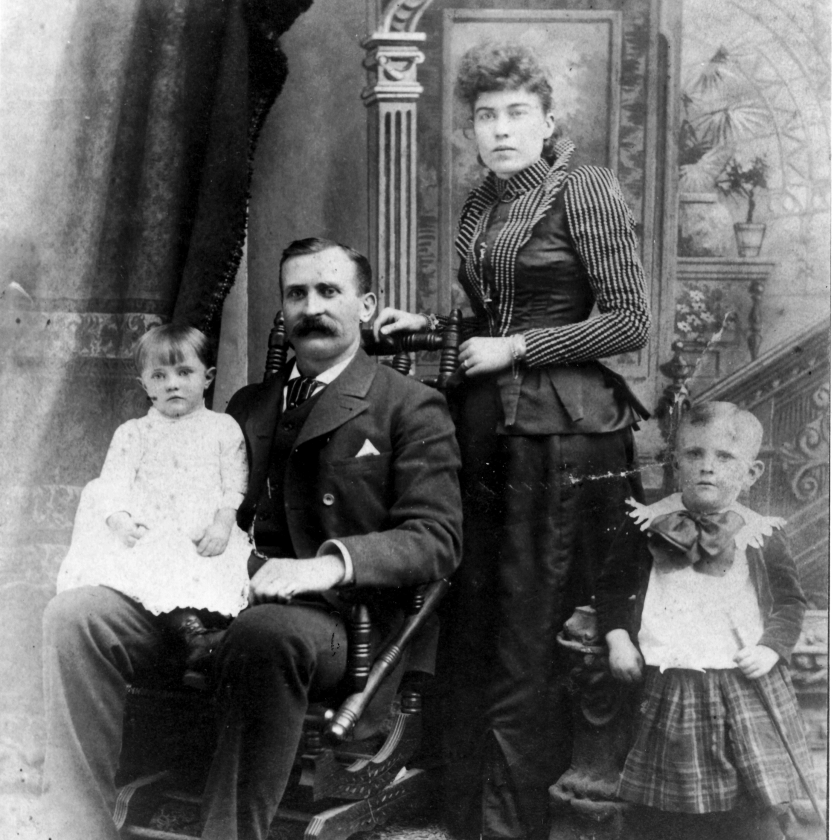
In 1894 Margaret Tobin and James Joseph Brown made 1340 Pennsylvania their home. Margaret married charming mine engineer J.J. in Leadville, Colorado after moving there from Hannibal, Missouri. The Browns were soon parents to two children, Lawrence and Helen.
J.J. lent his engineering skills to the IBEX Mining Company’s Little Johnny mine. His work helped IBEX produce the greatest gold strike in North America, bringing in as much as 1,000 tons of high-grade ore each day.
This fortune allowed the Browns to buy a fashionable house in an up-and-coming Denver neighborhood. It was fully modern with electricity, plumbing, central heat, and a telephone – a perfect house for a family looking to make their mark on Denver.
To celebrate their wealth, the Browns traveled the world. They visited Europe, India, China, and Japan. They decorated their home with souvenirs from around the world, including the front porch sphinx statues.
MRS. BROWN FOR CONGRESS
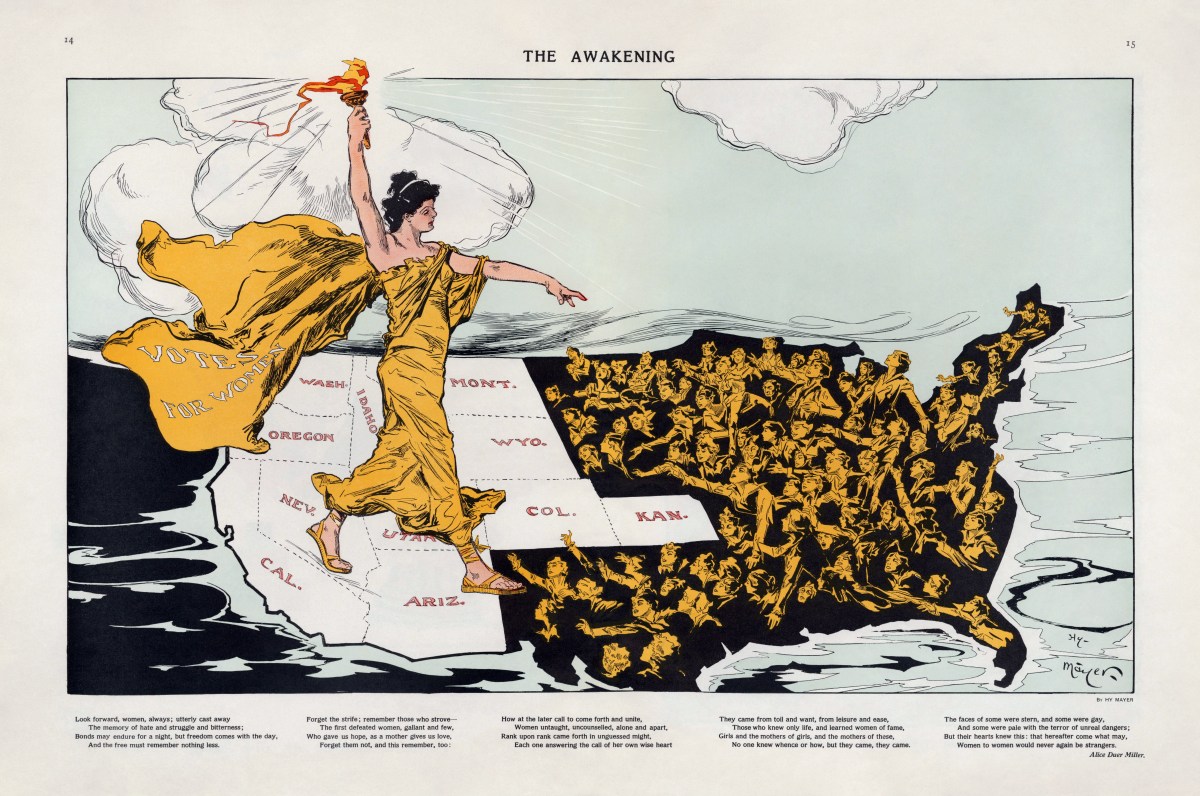
Colorado women like Margaret were some of the first women voters in the country. Colorado was the first state to pass women’s suffrage in 1894, after the Wyoming and Utah territories. As a voter with progressive views on equality, Margaret joined the fight for national suffrage.
In 1914 suffrage leaders urged her to run for U.S. Senate. A woman had never entered the Senate, so Margaret’s campaign was big news. Headlines announcing “Mrs. Brown for Congress” flooded newspapers across the country.
“If I do go to the Senate, I shall be specifically interested in all matters relating to women and children. In general, I shall stand for the human side of every question.” – Margaret Brown, 1914
When Colorado’s pro-suffrage Senator Thomas ran for a second term, suffrage leaders like Ellis Meredith and Helen Ring Robinson advised Margaret to drop her campaign. She then turned her attention to the Red Cross as WWI unfolded in Europe.
The efforts of generations of women were victorious in 1920 with the passage of the 19th Amendment, granting women the right to vote. It was not until the 1965 Voting Rights Act, however, that women of color would have full access to the ballot.
HEROINE OF THE TITANIC
Margaret boarded the new ocean liner RMS Titanic in April, 1912, returning from a trip abroad. Newspapers remarked that the White Star Line’s Titanic was “practically unsinkable” due to its watertight compartments.
Days into the journey, the ship struck an iceberg. Titanic officers instructed women and children into the few available lifeboats, forcing most men to sink with the ship. Margaret was shocked to see the unequal treatment of passengers. Amid the fight for women’s suffrage, she exclaimed, “Women demand equal rights on land – why not on sea?”
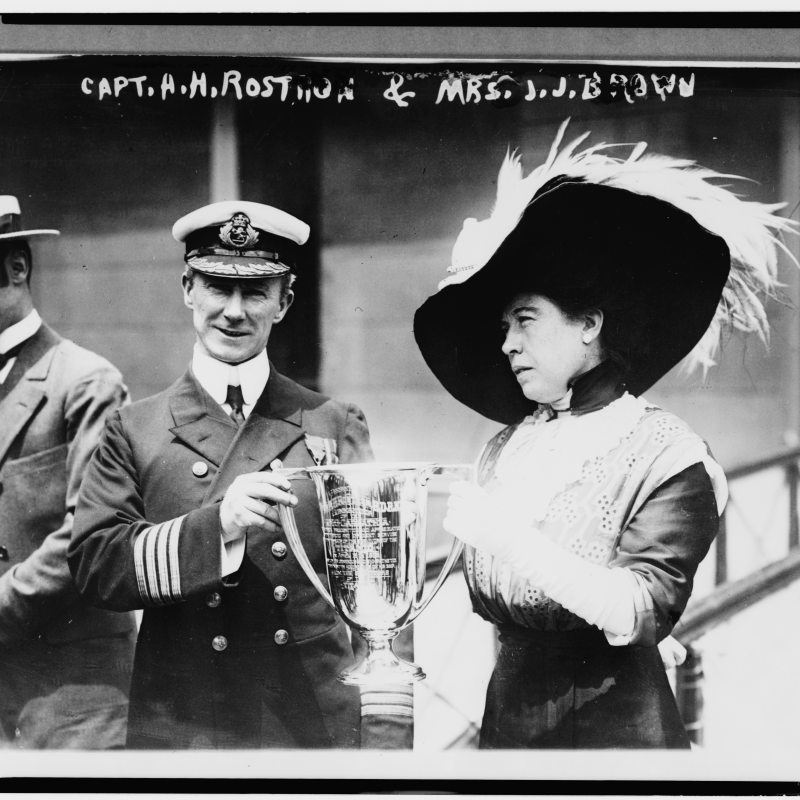
The RMS Carpathia rescued Titanic survivors early the next day, including Margaret in Lifeboat 6. She formed a Survivor’s Committee to raise money for the destitute survivors. She used her skill in foreign language and nursing to comfort immigrant survivors and refused to leave the rescue ship until she had done all she could to help.
For all her efforts, the press and fellow passengers called Margaret Brown the Heroine of the Titanic. To the title of “Heroine,” Margaret insisted, “I simply did my duty as I saw it… There was nothing I did throughout the whole affair that anyone else wouldn’t have done.”
LIFELONG SCHOLAR
“During my years of travel, I have tried to justify my existence by hard sincere study, not alone of languages, but of peoples.” – Margaret Brown, 1922
Growing up in Hannibal, Missouri, Margaret attended a school run by her aunt. She continued her education into adulthood, hiring tutors and attending classes at the Carnegie Institute. She spoke French, Italian, German, and Russian, and possibly some Gaelic. The Browns also ensured their children and nieces received a top education.
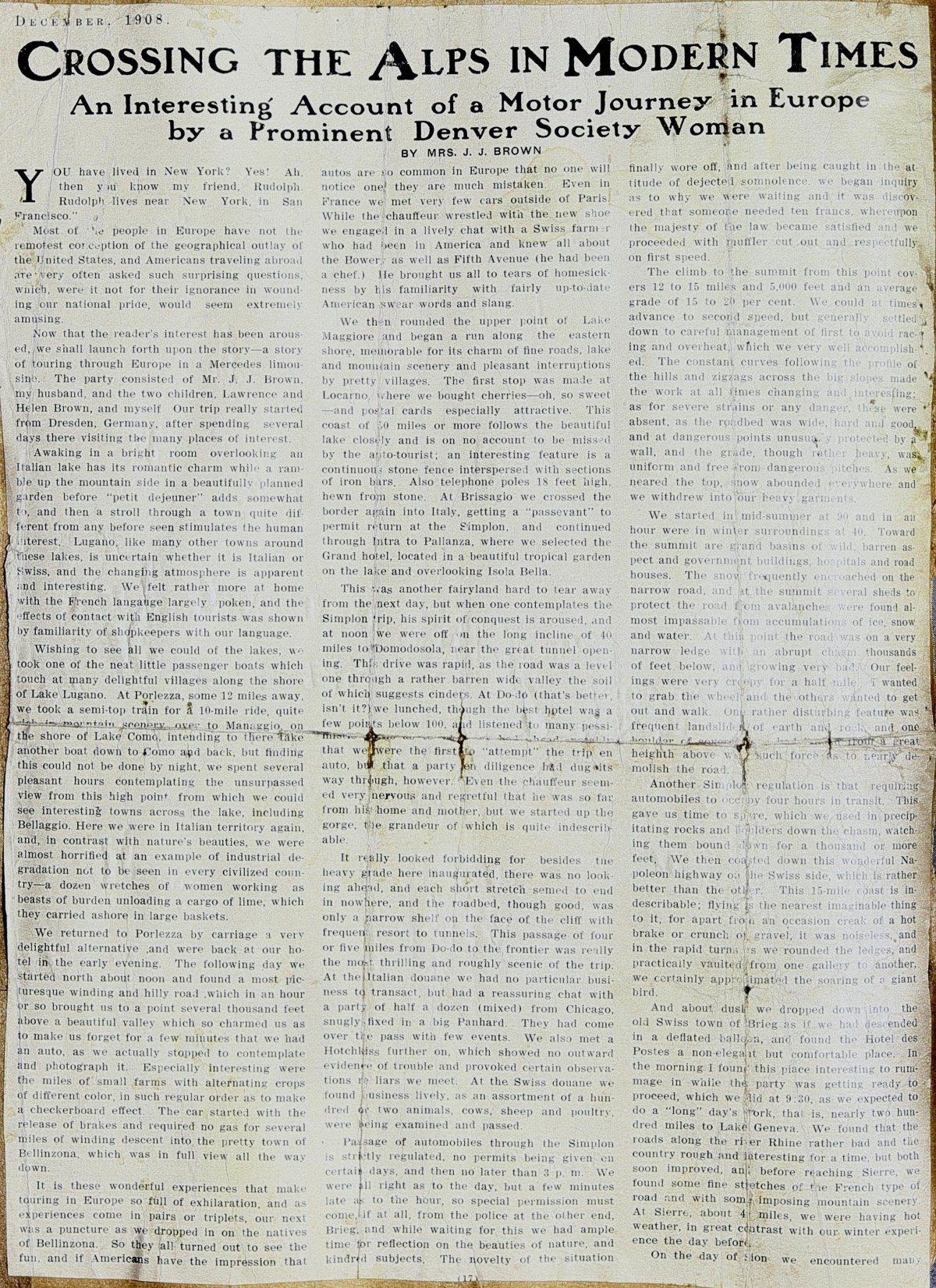
Margaret was an avid writer, publishing articles in newspapers across the country. She entertained readers with stories of her travels, but also spoke out against unjust systems and inequalities. After the Titanic sinking, she detailed the horrors of her experience and insisted equality should extend to the sea.
“I’m preparing to explode a few myths centering on the Titanic, one or two halos will disappear. I am writing of my experiences and shall tell the truth.” – Margaret Brown, 1927
She wrote an autobiography titled “The Course of Human Events” in 1927, but it was never published and is lost to history. Newspaper reports of her book contributed to later mythmaking about Margaret, including an account she had reportedly given of herself being mugged by Jesse James while traveling to Colorado in a covered wagon.
ENTERTAINING FOR A CAUSE
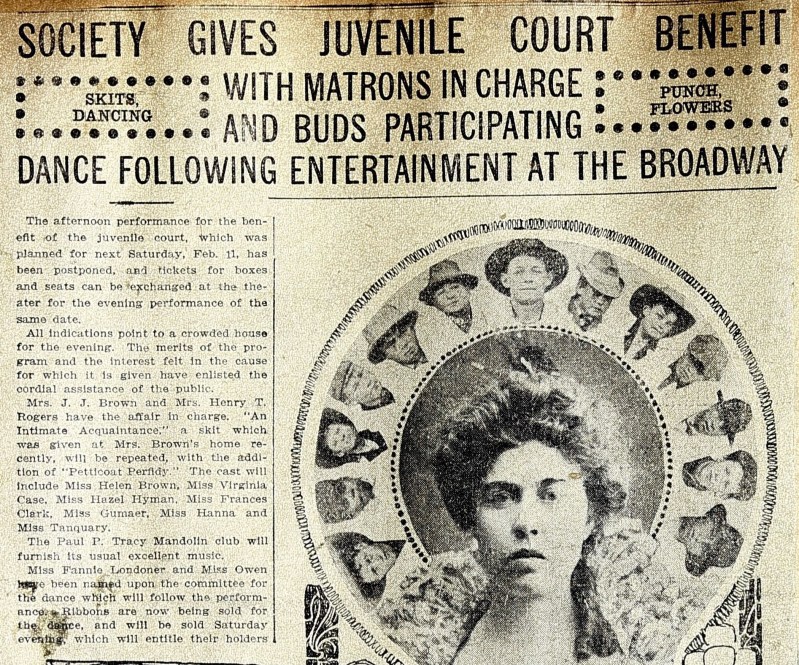
One of the largest parties Margaret hosted here at 1340 Pennsylvania was a 1910 garden party. She entertained 800 guests with live performances and unique décor, spreading rare Persian rugs on the lawn under electric lights for dancing.
For entertaining, and to lessen the need for servants, Margaret invented a portable electric luncheon wagonette designed to keep food hot and cold. She used her unique device when she invited guests to her cottage in Newport, RI.
Many of these social events were fundraisers for the Browns’ favorite causes. Margaret began philanthropic efforts in Leadville, opening a soup kitchen after a mine cave-in. Child welfare was another worthy cause to Margaret. Through the Denver Club she helped build playgrounds and orphanages, supporting the work of Judge Benjamin Barr Lindsey who started Denver’s Juvenile Court.
The Browns supported the construction of the Cathedral of Immaculate Conception, just two blocks away. J.J. donated funds while Margaret oversaw The Carnival of Nations in 1906, a well-publicized event to raise money for the Cathedral. Margaret planned the concept for a “village of all nations,” inspired by their travels.
J.J. BROWN, THE MINER’S FRIEND
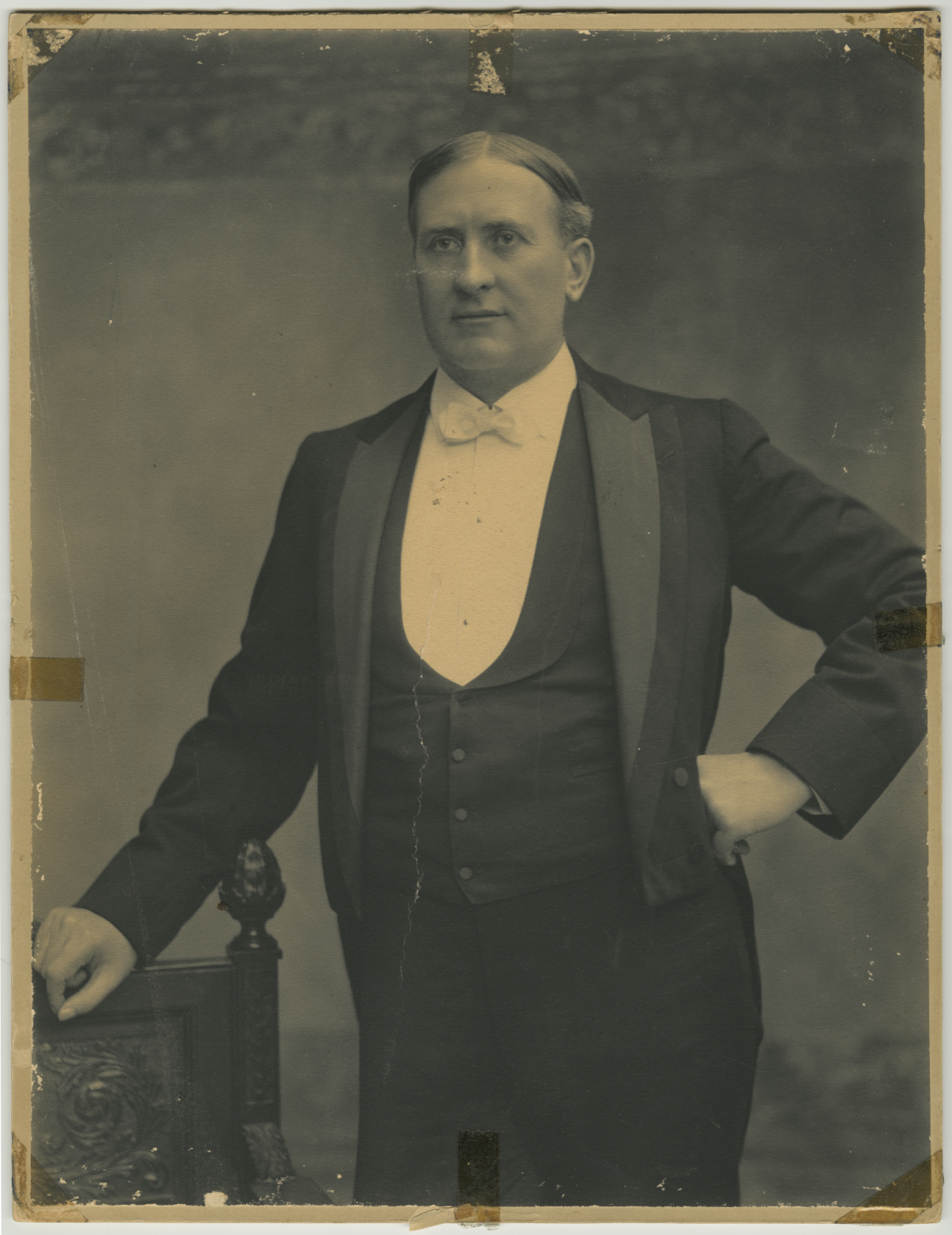
J.J. Brown’s work on the Little Johnny strike allowed the family to fund causes and social reform efforts like suffrage. J.J. supported many of Margaret’s causes but also had philanthropic goals of his own.
He felt he owed the boys at Denver’s Saint Vincent’s Orphanage for the loss of their fathers in the mines. At Christmastime he worked with his friend David May of the May Department Store to deliver suits, coats, and shoes to the boys.
An account written in 1895 about J.J. said, “Mr. Brown is better known throughout the state as ‘the miner’s friend’… He is generous to a fault and puts his hand in his pocket to aid others [more often] than he does his own interests.”
After years of poor health, J.J. Brown died in September of 1922 near the home of daughter Helen in New York. It took years to settle his estate, with numerous court appearances and legal correspondence between Margaret and the children, Larry, and Helen.
“I’ve never met or expect to meet a finer, bigger, more worth-while man than J.J Brown. They don’t make them like him anymore. I salute his memory and proclaim him to have been without a peer.” – Margaret Brown, 1922
IN SERVICE TO THE BROWNS
Margaret paid her servants well and family stories say she treated them like friends, but even the Browns’ servants had hard lives. Typically, a servant worked a 16-hour day, 6 days per week. A housemaid in 1900 made $30.00 per month, depending on whether the servant lived in or left at the end of the workday. Around 1900, more servants chose factory work or secretarial jobs to avoid the long hours of live-in work.
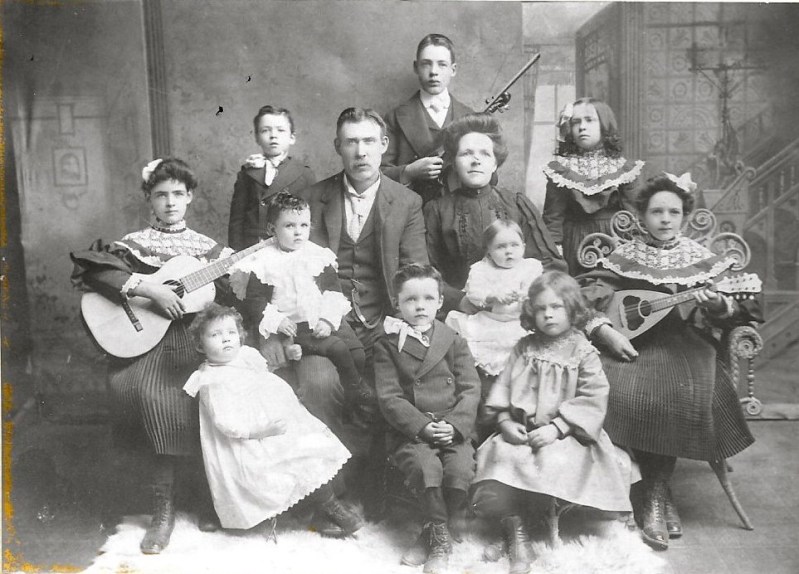
Irish immigrant Mary Fitzharris worked for the Brown family in Leadville and learned French alongside Margaret. Family stories say that when all moved to Denver, Margaret would pick up Mary’s twins, Leonard and Veronica, for a carriage ride around the city.
Mary Mulligan, daughter of Irish immigrants, worked here at 1340 Penn. as the Browns’ housekeeper and seamstress. She lived here in the servants’ bedroom. Mary traveled with the Browns on a trip to India, China, and Japan, where she was inspired to create new gowns for Margaret.
Born in Mississippi, Ella Grable was a housekeeper and dressmaker. By 1929, Ella began work here at 1340 Penn., running a boarding house for Margaret. The two wrote countless letters back and forth, many of which are preserved in the museum’s archives.
DAUGHTER OF ADVENTURE
“I am a daughter of adventure… I never know when I may go up in an airplane and come down with a crash… That’s my arc, as the astrologers would say. It’s a good one, too, for a person who had rather make a snap-out than a fade-out of life.” – Margaret Brown, 1929
Later in life, Margaret moved to the Barbizon Hotel in New York, a residence for women only. The Barbizon was a prime location to start her acting career. She travelled between Paris and New York, studying the methods of French actress Sarah Bernhardt and starring in several plays. Margaret also sang, played zither and guitar, and spent two years in Germany perfecting the art of yodeling.
In 1932 Margaret was awarded the French Legion of Honor for her dramatic talent, heroism on Titanic, and work in France during WWI. The award praised her for supporting the Red Cross in France and creating a school for blinded soldiers.
Just months after receiving the Legion of Honor, Margaret Brown passed away in her sleep at the Barbizon Hotel. Both Margaret and J.J. Brown are buried in Holy Rood Cemetery, Long Island, New York.